
OSI Model-
OSI or Open System Interconnection model was developed by International Standards Organization (ISO), which allows different communication systems to communicate via standard protocols. It gives a layered networking framework that conceptualizes how communications should be done between heterogeneous systems. In layman's terms, the OSI establishes a standard for computer systems to communicate with one another.
The model divides the flow of data in a communication system into seven abstraction levels or seven interconnected layers. The seven layers of the OSI Model are a physical layer, data link layer, network layer, transport layer, session layer, presentation layer, and application layer, as shown in the following diagram −
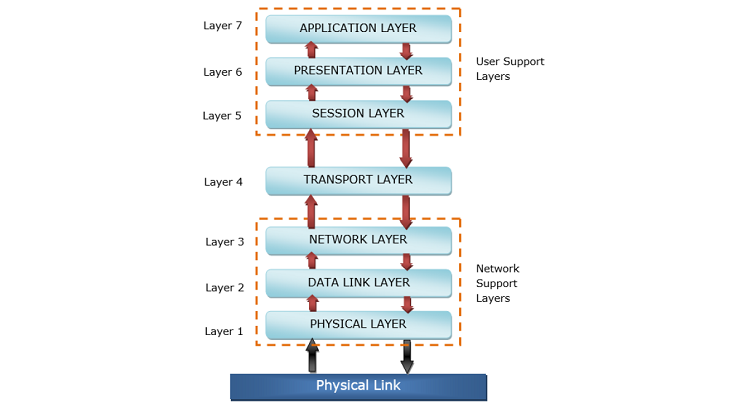
Each intermediary layer provides a class of functionality to the layer above it while also receiving service from the layer below. Standard communication protocols are used to implement classes of functionality in software.
- The physical layer, data link layer, and network layer are the network support layers. The layers manage the physical transfer of data from one device to another.
- The session layer, presentation layer, and application layer are the user support layers. These layers allow communication among unrelated software in dissimilar environments.
- The transport layer links the two groups.


0 comments:
Post a Comment